
Ready-to-Move vs Under-Construction Property: Which Is Better for Homebuyers?
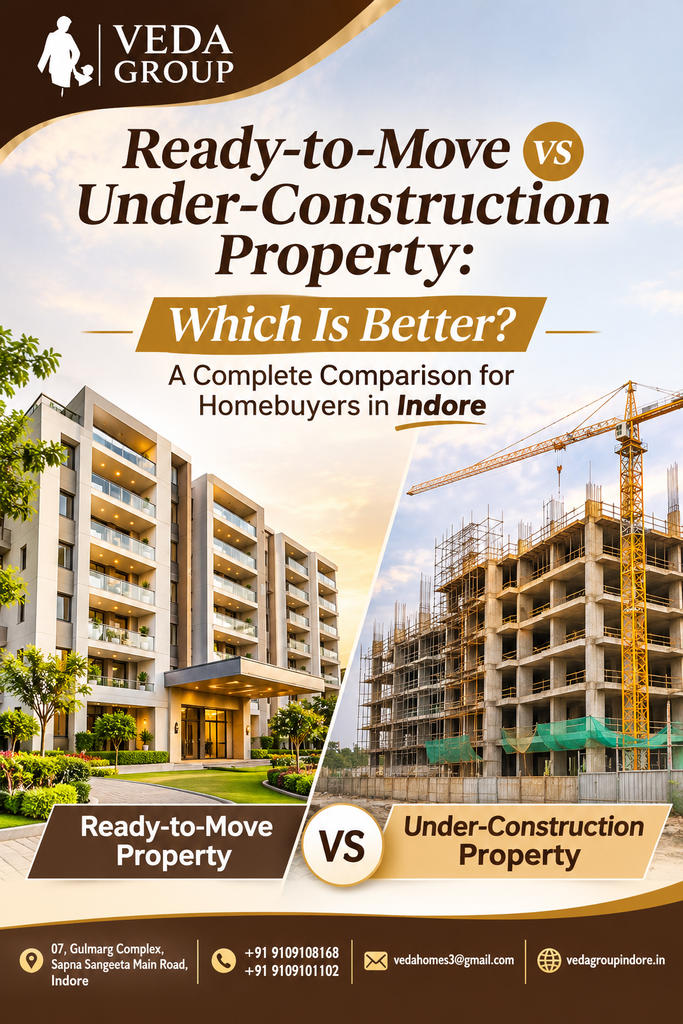
Buying a home is one of the biggest financial decisions in a person’s life. Beyond choosing the right location, budget and floor plan, every homebuyer faces an important question: Should you invest in a ready-to-move property or choose an under-construction property?
Both options offer different advantages, financial considerations and potential risks. A ready-to-move home provides immediate possession and the opportunity to inspect the actual property before purchasing. On the other hand, an under-construction property may offer a more flexible payment schedule, a wider choice of units and the opportunity to purchase at an earlier project stage.
However, choosing the right property is not simply about comparing prices. You must evaluate the total investment, construction quality, possession timeline, legal approvals, taxation, financing and your future requirements.
In this detailed guide, we compare ready-to-move vs under-construction property to help you make a confident and informed real estate decision, especially if you are planning to buy a home in Indore.
1. What Is a Ready-to-Move Property?
A ready-to-move property is a residential unit in a completed building that is available for possession. The construction is finished, and the buyer can inspect the actual apartment, amenities and common areas before finalising the purchase.
A legally compliant ready-to-move property should have the applicable completion and occupancy approvals from the competent authority.
Major advantages of ready-to-move properties
- Immediate possession: You can plan your move without waiting for the entire construction process.
- Physical inspection: You can examine the actual layout, rooms, ventilation, lighting, fittings and construction quality.
- No construction waiting period: You do not have to depend on a future construction schedule.
- Potential rental income: Once the purchase and handover formalities are complete, the property may be ready for tenants.
- Greater clarity: You can assess the completed building, surroundings and available facilities before purchasing.
Possible disadvantages
- Higher initial purchase price in some locations.
- Limited choice of available units, floors and layouts.
- Less flexibility to customise interiors or construction specifications.
- Older completed properties may require repairs or renovation.
2. What Is an Under-Construction Property?
An under-construction property is a residential unit in a project where construction is still in progress. Buyers generally book the property based on approved plans, project specifications, agreements and the developer’s promised possession timeline.
These properties are often marketed during the early stages of development, when buyers may have access to a wider selection of units and construction-linked payment options.
Major advantages of under-construction properties
- Potentially attractive pricing: Early-stage booking may offer pricing advantages compared with later project stages.
- Flexible payment structure: Payments may be linked to construction milestones, depending on the agreement.
- More unit choices: Buyers may have a wider selection of floors, views and configurations at an early stage.
- Modern planning: Newer projects may incorporate contemporary layouts, infrastructure and lifestyle amenities.
- Long-term planning: Buyers who do not need immediate possession can plan their finances around the expected completion date.
Possible disadvantages
- Construction delays can affect possession.
- You may need to pay rent while also servicing pre-EMI or loan installments.
- The final experience depends on construction quality and delivery as per agreed specifications.
- GST may apply to eligible under-construction purchases.
- You cannot fully inspect the finished apartment and common areas before booking.
3. Ready-to-Move vs Under-Construction Property: Complete Comparison
Understanding the differences between these two property types will help you evaluate which option matches your financial position and lifestyle.
| Comparison Factor | Ready-to-Move Property | Under-Construction Property |
|---|---|---|
| Possession | Usually available after purchase formalities | Available after project completion and approvals |
| Purchase price | May be higher | May offer early-stage pricing |
| GST | Generally not applicable when the entire consideration is received after completion certificate or first occupation, whichever is earlier | Generally applicable, subject to GST rules |
| Payment structure | Usually larger payment at purchase | May offer construction-linked instalments |
| Construction quality | Actual property can be inspected | Relies on plans, specifications and construction progress |
| Customisation | Usually limited | May be possible depending on project stage and agreement |
| Rental income | Can potentially start sooner | Usually begins after possession |
| Delay risk | Lower once legally completed | Construction and handover delays are possible |
| Unit selection | Depends on remaining inventory | Often wider during early booking |
| Investment horizon | Suitable for buyers seeking immediate use | May suit buyers with a longer waiting period |
Important: A completed building is not automatically a legally ready property. Always verify the applicable occupancy certificate and other approvals before making payment.
4. Cost Comparison: Which Property Is Actually More Affordable?
One of the biggest mistakes buyers make is comparing only the advertised property price.
The real cost of purchasing a property includes several additional expenses. An under-construction apartment may initially appear less expensive, but the final financial calculation should include GST, rent during construction, loan interest and other charges.
Similarly, a ready-to-move property may have a higher purchase price but offer immediate usability and fewer waiting-related expenses.
Important costs to compare
1. Basic property price
Compare the total price of properties with similar carpet areas, locations, specifications and amenities. Avoid comparing two properties only on the basis of their advertised price per square foot.
2. GST
GST treatment is an important difference between the two options.
Under the applicable GST framework, qualifying under-construction residential apartments generally attract an effective GST rate of 5% for non-affordable residential apartments and 1% for qualifying affordable housing, subject to applicable conditions.
A completed property sold after the required completion certificate or first occupation, whichever is earlier, is generally outside GST on construction services when the entire consideration is received after that point.
3. Stamp duty and registration
Stamp duty and registration charges are important parts of the property acquisition budget. These charges are governed by applicable state rules and should be calculated separately.
4. Home loan interest
For under-construction properties, banks and financial institutions commonly release loan amounts in stages according to construction progress. Buyers may have to pay interest on the disbursed amount before full EMI repayment begins.
For ready-to-move properties, loan disbursement is generally linked to the completed purchase transaction.
5. Rent during construction
If you are currently living in a rented property, include the rent you may have to pay until the new home is handed over.
Example: Comparing the actual cost
Consider a hypothetical comparison:
| Expense | Ready Property | Under-Construction Property |
|---|---|---|
| Basic property price | ₹80 lakh | ₹75 lakh |
| Illustrative GST | Not applicable, subject to conditions | ₹3.75 lakh at 5% |
| Rent during waiting period | Not assumed | ₹3 lakh |
| Other charges | To be verified | To be verified |
| Illustrative subtotal | ₹80 lakh | ₹81.75 lakh |
This example excludes stamp duty, registration, loan interest, maintenance deposits, parking and other applicable charges. It is not a market quotation.
The lesson is simple: Always compare the total acquisition and waiting cost, not just the builder’s advertised price.
5. Construction Quality: What Should Buyers Evaluate?
Construction quality directly influences the safety, durability, comfort and maintenance requirements of a home.
In a ready-to-move property, buyers can inspect the actual structure and finished interiors. You can check the quality of flooring, doors, windows, plumbing, electrical fittings, water pressure and common areas.
For an under-construction property, the evaluation requires a different approach. Buyers should carefully review the construction specifications mentioned in the agreement and monitor the project’s progress.
Construction quality checklist
- Quality of structural design and construction.
- Materials used for walls, flooring and finishing.
- Electrical wiring and plumbing specifications.
- Waterproofing and drainage arrangements.
- Ventilation and natural lighting.
- Lift, staircase and fire-safety provisions.
- Water supply and sewage management.
- Quality and maintenance of common areas.
If possible, consult an independent civil engineer or qualified technical professional before making a final decision.
6. Legal Documentation: What Should You Check Before Buying?
Whether you choose a ready-to-move or under-construction property, legal verification should never be ignored.
A property with attractive pricing and modern amenities may still create problems if the necessary approvals, ownership documents or contractual details are not properly verified.
Documents to check for ready-to-move properties
- Title deed and ownership documents.
- Applicable sanctioned building plans.
- Completion certificate, wherever required.
- Occupancy certificate, wherever required.
- Encumbrance and applicable dues records.
- Property tax and maintenance payment records.
- Sale agreement and possession documents.
- Relevant approvals and utility connections.
Documents to check for under-construction properties
- Project registration details under the applicable RERA provisions.
- Land title and ownership-related documents.
- Approved building plans and layout.
- Relevant development and construction permissions.
- Agreement for sale.
- Promised possession date.
- Construction specifications and payment schedule.
- Project progress and disclosures on the applicable RERA portal.
For buyers in Madhya Pradesh, verify the project’s applicable registration and disclosures through the Madhya Pradesh RERA portal.
Remember that RERA registration is an important safeguard, but it does not replace independent legal verification.
7. Which Property Is Better for Investment?
The investment potential of a property depends on several factors, including location, connectivity, surrounding infrastructure, demand, project quality, purchase price and future development.
Ready-to-move property as an investment
A completed property may be suitable for investors who want to generate rental income sooner. Since the actual property can be inspected, investors can assess its condition, neighbourhood, accessibility and tenant suitability before purchasing.
It can also be attractive to buyers who prefer greater clarity about their investment.
Under-construction property as an investment
An under-construction property may offer an opportunity to enter a project at an earlier stage. If the location develops, demand improves and the project is delivered successfully, the property may gain value over time.
However, appreciation is never guaranteed. Construction delays, changing market conditions, additional expenses and developer-related risks can affect the outcome.
What should investors compare?
- Location and surrounding development.
- Purchase price compared with similar properties.
- Expected rental demand.
- Project completion timeline.
- Developer’s delivery history.
- Total cost, including taxes and additional charges.
- Potential resale demand.
- Long-term maintenance expenses.
A sound real estate investment is based on the property’s fundamentals rather than promotional promises.
8. Which Option Is Better for Different Types of Homebuyers?
There is no universal answer. The right decision depends on why you are purchasing the property and how soon you need it.
| Buyer Profile | More Suitable Option | Reason |
|---|---|---|
| Family needing immediate possession | Ready-to-move | Avoids waiting for construction |
| Buyer currently paying rent | Ready-to-move, if financially suitable | May reduce rent and EMI overlap |
| First-time homebuyer | Depends on budget and timeline | Requires careful cost and document evaluation |
| Long-term investor | Either option | Depends on location, price and risk |
| Buyer seeking more unit choices | Under-construction | Early stages may offer wider selection |
| Buyer who wants to inspect the actual home | Ready-to-move | Finished property can be examined |
| Buyer with a flexible possession timeline | Under-construction | Can consider construction-linked payments |
9. Important Factors to Consider Before Buying Property in Indore
Indore offers different residential and commercial property options across established neighbourhoods and developing areas. However, choosing a property should involve more than selecting a location that appears popular.
Before investing in a residential project in Indore, consider:
Location and connectivity: Evaluate access to workplaces, schools, hospitals, markets and major roads.
Neighbourhood infrastructure: Examine existing facilities and the actual progress of planned infrastructure rather than relying only on future development promises.
Developer credibility: Review completed projects, construction standards, delivery history and customer feedback.
Project approvals: Verify applicable permissions, land documents and RERA registration details.
Lifestyle requirements: Consider security, parking, open spaces, recreational facilities, ventilation and everyday convenience.
Resale and rental potential: Understand the demand for similar properties in the surrounding area.
A well-informed property decision considers both present-day convenience and long-term suitability.
10. Why Choosing the Right Builder and Developer Matters
The quality of your property experience depends not only on whether you buy a ready-to-move or under-construction home, but also on the developer responsible for delivering it.
A professional real estate developer should focus on construction quality, transparent communication, appropriate approvals, functional planning and customer support.
At Veda Group, the focus is on developing residential and commercial spaces with an emphasis on quality, functionality and modern planning. Its portfolio includes Veda Homes, Veda Park and Veda Commune.
Homebuyers exploring residential developments can learn more about Veda Group and its projects through the official website.
Website: https://vedagroupindore.in/
11. Final Verdict: Ready-to-Move or Under-Construction Property?
So, which is better?
The answer depends on your priorities.
Choose a ready-to-move property if immediate possession, physical inspection, greater timeline certainty and the possibility of earlier rental income are important to you.
Choose an under-construction property if you have a flexible timeline, can manage the financial commitments during construction, prefer a wider selection of units and have thoroughly evaluated the developer, approvals and project progress.
Neither option is automatically cheaper, safer or more profitable. A good property purchase is one where the location, total cost, documentation, construction quality and possession timeline align with your financial goals.
Before making your final decision, compare at least two or three suitable properties, examine their complete cost sheets and consult qualified legal and financial professionals where necessary.
Planning to buy a residential or commercial property in Indore? Explore Veda Group to learn more about thoughtfully planned real estate developments.
Frequently Asked Questions (FAQs)
1. Is ready-to-move property better than under-construction property?
Ready-to-move property may be better for buyers who need immediate possession and want to inspect the actual home. Under-construction property may suit buyers with flexible timelines and the ability to manage construction-related financial commitments.
2. Is GST applicable on ready-to-move properties?
Generally, GST is not applicable to a completed residential property when the entire consideration is received after the completion certificate or first occupation, whichever is earlier. The specific transaction and applicable conditions should be checked with a tax professional.
3. Is GST applicable on under-construction flats?
Yes, eligible under-construction residential apartment purchases generally attract GST. The effective rate is generally 5% for non-affordable residential apartments and 1% for qualifying affordable housing, subject to applicable conditions.
4. Can I get a home loan for an under-construction property?
Yes. Banks and housing finance companies offer home loans for eligible under-construction properties. Loan approval depends on the buyer’s eligibility, project documentation and the lender’s assessment.
5. What happens if a builder delays possession?
Buyers may have remedies under the Real Estate (Regulation and Development) Act, 2016, depending on the circumstances and agreement. These may include seeking a refund with applicable interest or interest for delay, subject to legal conditions.
6. What documents should I check before buying a flat in Indore?
Check the title documents, sanctioned plans, applicable approvals, RERA registration where required, agreement for sale, completion and occupancy certificates where applicable, and outstanding dues. Independent legal verification is strongly recommended.
7. Which property is better for rental income?
A ready-to-move property can generally generate rental income sooner because it is available for occupation. An under-construction property can generate rent only after completion, required approvals and possession.
8. How do I choose a reliable builder in Indore?
Evaluate the developer’s completed projects, construction quality, delivery record, legal approvals, transparency, customer feedback and project registration details. Do not make a decision based only on advertisements or promises.
Contact Veda Group
07, Gulmarg Complex, Sapna Sangeeta Main Road, Indore, Madhya Pradesh
+91 9109108168 / +91 9109101102
vedahomes3@gmail.com